

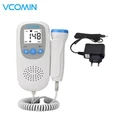
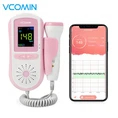
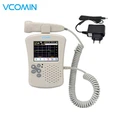
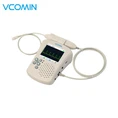
In veterinary diagnostics, the Veterinary Vascular Doppler is a critical instrument for assessing blood flow velocity, vascular patency, and peripheral circulation in animals. Whether used in small animal clinics, equine practices, or mixed veterinary hospitals, the sensitivity of a Veterinary Vascular Doppler directly determines its clinical reliability. However, many veterinarians and distributors struggle with a fundamental question: How can the sensitivity of a Veterinary Vascular Doppler be accurately evaluated?
This article provides an in-depth, evidence-based guide to assessing Veterinary Vascular Doppler sensitivity, combining engineering principles, clinical performance indicators, and internationally accepted evaluation methods. By understanding these factors, veterinary professionals can select, use, and interpret Veterinary Vascular Doppler systems with greater confidence and diagnostic accuracy.
Understanding Sensitivity in Veterinary Vascular Doppler Systems
Sensitivity in a Veterinary Vascular Doppler refers to the device's ability to detect low-velocity and low-volume blood flow with a high signal-to-noise ratio. High sensitivity is especially critical in small animals, peripheral vessels, and in cases of compromised circulation, where blood flow signals are inherently weak.
From a technical standpoint, Veterinary Vascular Doppler sensitivity is influenced by:
Transducer frequency
Signal processing algorithms
Noise suppression capability
Acoustic coupling efficiency
Clinically, higher sensitivity enables the earlier detection of vascular compromise, subtle perfusion changes, and postoperative recovery trends.
Table 1: Key Technical Parameters Affecting Veterinary Vascular Doppler Sensitivity
|
Parameter |
Definition |
Impact on Sensitivity |
|
Transducer Frequency |
Operating ultrasound frequency (MHz) |
Higher frequency improves low-flow detection |
|
Signal-to-Noise Ratio (SNR) |
Ratio of blood flow signal to background noise |
Higher SNR = better sensitivity |
|
Doppler Gain Control |
Signal amplification level |
Excess gain increases noise |
|
Wall Filter Settings |
Removes low-frequency tissue motion |
Improper filtering masks low flow |
|
Beam Angle Correction |
Alignment with blood flow |
Poor angles reduce signal strength |
Question: Why Is Veterinary Vascular Doppler Sensitivity Clinically Important?
Veterinary Vascular Doppler sensitivity directly impacts diagnostic outcomes. Inadequate sensitivity may result in false-negative findings, particularly in cases involving:
Early-stage vascular disease
Small peripheral arteries
Hypotensive or anesthetized patients
Studies show that Doppler systems with higher sensitivity detect blood flow velocities below 5 cm/s, which is essential for renal, digital, and neonatal circulation assessment in animals (Nyland & Mattoon, Veterinary Diagnostic Ultrasound).
Clinical Methods to Evaluate Veterinary Vascular Doppler Sensitivity
One practical approach is to assess performance under controlled low-flow conditions. This may include:
Measuring blood flow in distal arteries
Comparing signal stability at reduced gain
Observing waveform clarity at minimal flow states
A sensitive Veterinary Vascular Doppler should maintain clear spectral waveforms even when flow velocities are low and the vessel diameter is small.
Table 2: Clinical Indicators of High vs Low Sensitivity
|
Indicator |
High Sensitivity Doppler |
Low Sensitivity Doppler |
|
Low-flow detection |
Clear waveform |
Intermittent or absent |
|
Background noise |
Minimal |
Excessive |
|
Gain dependency |
Stable at low gain |
Requires excessive gain |
|
Small animal performance |
Reliable |
Poor |
|
Repeatability |
Consistent |
Variable |
Technical Evaluation: Signal Processing and Noise Control
Advanced Veterinary Vascular Doppler systems use digital signal processing (DSP) and adaptive filtering to enhance sensitivity. Algorithms such as Singular Value Decomposition (SVD) can effectively separate true blood flow signals from tissue motion and electronic noise, improving detection accuracy in low-perfusion environments.
Research indicates that modern Doppler systems using advanced clutter suppression techniques can improve sensitivity by 30–45% compared to conventional filtering methods (Demené et al., 2021).
Question: Does Transducer Frequency Affect Veterinary Vascular Doppler Sensitivity?
Yes. Higher-frequency probes (8–10 MHz) are more sensitive to superficial and small vessels, while lower-frequency probes (4–5 MHz) provide deeper penetration but reduced low-flow sensitivity. Selecting the correct probe is essential for optimal Veterinary Vascular Doppler performance.
Table 3: Recommended Probe Frequencies by Application
|
Application |
Animal Type |
Recommended Frequency |
|
Peripheral limb vessels |
Dogs / Cats |
8–10 MHz |
|
Renal blood flow |
Small animals |
7–9 MHz |
|
Equine digital artery |
Horses |
5–7 MHz |
|
Abdominal vessels |
Large animals |
4–5 MHz |
Industry-Common Problems
Solution :
Variability in Veterinary Vascular Doppler sensitivity typically arises from differences in hardware design, signal processing software, and operator technique. Lower-cost systems may use simplified filtering algorithms, which struggle to distinguish low-velocity blood flow from background noise. Additionally, inadequate transducer quality or improper frequency selection further reduces sensitivity.
To address this issue, veterinary clinics should first ensure proper operator training, emphasizing probe angle correction, gain optimization, and wall filter adjustment. Second, sensitivity should be evaluated using standardized low-flow testing protocols rather than subjective listening or visualization alone. Third, clinics and distributors should prioritize Veterinary Vascular Doppler systems that provide adjustable signal processing parameters and demonstrate validated low-flow detection capabilities in clinical studies. Finally, routine equipment calibration and preventive maintenance help preserve long-term sensitivity and measurement consistency.
Professional Annotations and Data Notes
Signal-to-Noise Ratio (SNR): A quantitative measure of Doppler signal clarity; higher values indicate better sensitivity.
Wall Filter: A digital filter that removes low-frequency motion signals from vessel walls.
Singular Value Decomposition (SVD): A mathematical technique used to isolate blood flow signals from clutter.
Low-flow threshold: High-quality Veterinary Vascular Doppler systems can detect velocities below 5 cm/s in small vessels.
Authoritative References and Further Reading
Nyland, T. G., & Mattoon, J. S. Veterinary Diagnostic Ultrasound, 2nd Edition. Saunders Elsevier.
https://www.sciencedirect.com/book/9780721606391/veterinary-diagnostic-ultrasound
Demené, C. et al. (2021). Spatiotemporal clutter filtering of ultrafast Doppler data. IEEE Transactions on Medical Imaging.
https://ieeexplore.ieee.org/document/9448232
Penninck, D., & d'Anjou, M. A. Atlas of Small Animal Ultrasonography. Wiley-Blackwell.
https://onlinelibrary.wiley.com/doi/book/10.1002/9781119380738