


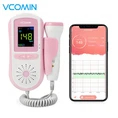
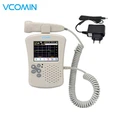
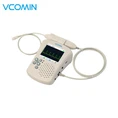
In pregnancy monitoring, fetal heart rate is one of the important indicators to measure the health of the fetus. Using a fetal heart monitor can help expectant mothers understand the heartbeat of the fetus at any time and ensure the healthy growth of the fetus. However, when choosing a fetal heart monitor, many people will face a problem: should they choose a 2MHz or 3MHz probe? This article will deeply analyze the difference between the two to help you make a scientific and reasonable choice.
1.The role and importance of fetal doppler
Fetal doppler is medical device that use the principle of ultrasonic Doppler to detect fetal heartbeats. Through the reflection of ultrasonic waves and the Doppler effect, fetal heart doppler can detect the pulsation of the fetal heart and convert it into audible sounds or visual fetal heart rate values.
1.1The main functions of fetal doppler
Monitoring fetal heart rate, usually between 110-160 beats/minute. Let pregnant women detect abnormalities of the fetus early, such as too fast or too slow heart rate. Provide a sense of security during pregnancy and reduce anxiety during pregnancy.
1.2 Main classification of fetal doppler
Fetal heart monitors are mainly divided into home fetal heart monitors and medical fetal heart monitors. Home fetal heart monitors are more suitable for expectant mothers to monitor themselves at home, while medical fetal heart monitors are used in hospitals for more professional fetal heart monitoring.

2. Why do fetal heart monitors use 2MHz or 3MHz probes?
Doppler fetal heart monitors usually use ultrasonic frequencies between 2MHz and 3MHz, which is determined by the penetration and echo characteristics of ultrasonic waves.
2MHz probe: lower frequency, stronger ultrasonic penetration, suitable for pregnant women in the middle and late pregnancy, especially when the fetus is in a deeper position or the pregnant woman is heavier.
3MHz probe: higher frequency, stronger detection sensitivity, suitable for early pregnancy, because the fetus is smaller, the ultrasonic wave of the 3MHz probe is more likely to be reflected back to the sensor, thereby capturing the fetal heart beat faster.
Usually, ordinary fetal monitors are equipped with only one probe, while some high-end models are equipped with 2MHz and 3MHz probes to meet the different needs throughout the pregnancy.
3.Key Differences Between 2MHz and 3MHz Probes
When choosing a fetal heart doppler, the working frequency of the probe is a key parameter. The most common probe frequencies on the market are 2MHz and 3MHz. The main differences between the two are as follows:
|
Parameter |
2MHz Probe |
3MHz Probe |
|
Penetration |
Stronger, reaches deeper tissues |
Weaker penetration |
|
Best for Pregnancy Stage |
Mid-to-late pregnancy (20+ weeks) |
Early pregnancy (12-20 weeks) |
|
Sensitivity |
Moderate, suitable for deeper fetal positions |
Higher sensitivity, easier to detect fetal heartbeats |
|
Ideal for |
Mothers with a higher BMI or excess amniotic fluid |
Smaller fetuses, earlier gestational weeks |
|
Common Usage |
More common in hospitals |
More common in home-use fetal Dopplers |
4. Does the fetal heart monitoring host need to be adjusted for different probes?
Many people may wonder: If probes of different frequencies are used, does the fetal heart monitoring host also need a different design?
In fact, the circuit part of the fetal heart monitoring host does not need special adjustments. Whether it is a 2MHz or 3MHz probe, the main function of the host is to display the fetal heart rate and play the fetal heart sound, and the core circuit is basically the same. The only difference is that the vibration circuit of the probe will be different to adapt to ultrasonic signals of different frequencies. In addition, in terms of display software, it is also necessary to optimize the probes of different frequencies to ensure the accuracy and stability of the fetal heart rate data.
5. Technical Requirements for a Fetal Doppler Probe
In order to ensure the measurement effect of the fetal heart monitor, the probe design must meet the following technical standards:
Moderate power: The ultrasonic transmission power must meet the medical safety standards to ensure that the detection effect will not affect the fetus.
High sensitivity: The receiving sensitivity of the probe is required to reach at least 90dB to ensure that the fetal heart signal can be clearly received.
Low noise design: The signal processing circuit needs to be optimized to reduce environmental noise interference and improve the accuracy of fetal heart rate measurement.
6. Conclusion: Which Probe is Best for You?
Early pregnancy (12-20 weeks) : 3MHz probe recommended. The fetus is smaller, and the 3MHz probe offers higher sensitivity.
Mid-to-late pregnancy (20+ weeks) : 2MHz probe recommended. As the fetus grows, its position lowers, requiring deeper penetration.
For full pregnancy use : A dual-probe fetal Doppler (2MHz + 3MHz) is the best choice, allowing users to switch probes based on gestational age.
Regardless of the probe type, device quality and safety should be the top priority. Look for a professional fetal doppler that meets international certifications such as ISO13485, CE, FDA, and other medical standards to ensure accurate and reliable monitoring.
No matter which probe is chosen, ensuring the quality and safety of the equipment is the most important. It is recommended to choose a professional fetal heart monitor brand with international certifications such as ISO13485, CE, and FDA to ensure the accuracy and reliability of the test.
7. About us
VCOMIN is a professional fetal heart monitor manufacturer, providing home portable fetal heart monitors and medical-grade fetal heart monitors, supporting OEM, ODM, and SKD. The products have passed ISO13485, CE, FDA, CFDA, ENVISA and other international certifications, and are exported to more than 100 countries around the world. If you need to customize or purchase high-quality fetal heart monitors, please contact us!
